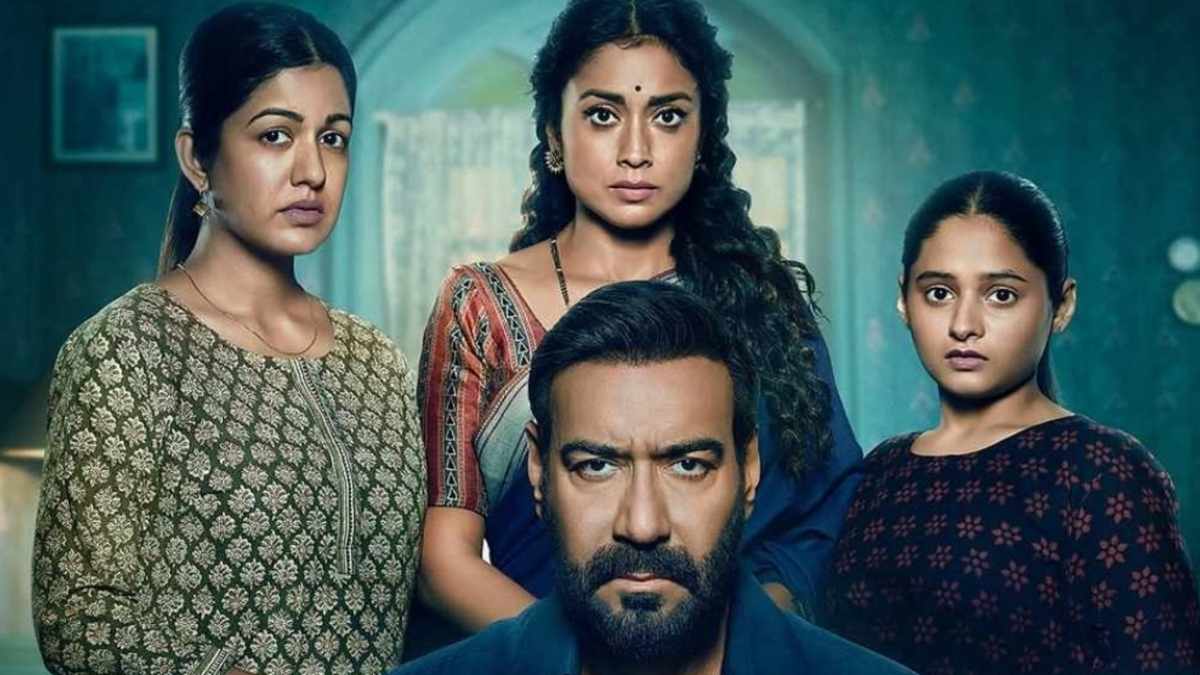
Drishyam 3 Review: Vijay Salgaonkar Has a New Problem, and This Time It’s Not Just October 2
If you have watched the Drishyam films, you probably don't need an introduction to October 2.
The date, the family outing, the pav bhaji, the satsang and Vijay Salgaonkar's perfectly prepared story have already become a part of Bollywood pop culture.
But Drishyam 3 is not interested in playing the same game all over again.
This time, there is another date to remember — July 23.
And the big question is simple: Where was Vijay that day?
That question brings Vijay back into the line of fire and puts him against a police officer who isn't ready to accept the old story at face value.
What Is Drishyam 3 About?
The Salgaonkar family has tried to move on with life, but the past is still hanging over them.
Sam Deshmukh's death remains an unresolved wound for Meera and Mahesh Deshmukh. When the case comes under fresh scrutiny, Superintendent of Police Rajveer Singh Tomar enters the picture.
Rajveer isn't interested in simply reopening an old file. He starts looking at the evidence differently and slowly turns his attention toward Vijay.
And this is where the film gets interesting.
The familiar October 2 story is still there, but now the investigation has another piece to work with. July 23 becomes an important part of the mystery, and Rajveer wants to know exactly what Vijay was doing that day.
Vijay, meanwhile, remains unusually calm.
That's when you start asking yourself: Does Vijay already know where this investigation is going?
Ajay Devgn Is Still the Biggest Reason to Watch
Ajay Devgn doesn't need to do much to make Vijay interesting.
His performance is deliberately controlled. There are no unnecessary dramatic reactions or loud moments. A look, a pause or a change in his expression is often enough.
And that works perfectly for Vijay.
You know this man has already thought several steps ahead. So whenever Rajveer finds something new, the natural reaction is to look at Vijay and wonder whether he has already prepared for it.
Devgn plays that uncertainty very well.
Vijay is not trying to look like the smartest person in the room. He simply behaves like someone who has learned that staying quiet can sometimes be more useful than explaining yourself.
Jaideep Ahlawat Gives Vijay a Serious Opponent
The biggest addition to the film's central conflict is Jaideep Ahlawat.
As Rajveer Singh Tomar, he doesn't come in with the usual loud police-officer attitude. His approach is much more patient.
He watches. He investigates. He connects small details.
Most importantly, he doesn't seem interested in being impressed by Vijay's reputation.
That makes the Vijay-Rajveer scenes some of the best parts of Drishyam 3.
The film works particularly well when both characters are simply trying to figure out what the other person knows.
There is no need for a big action sequence. The tension comes from the possibility that one of them may finally make a mistake.
The Supporting Cast Keeps the Film Balanced
Prakash Raj adds weight to the courtroom portions and gets some of the film's stronger dialogue moments.
Shriya Saran doesn't have as much to do this time around, but her emotional scenes still work. The family angle may not be as prominent as in the earlier films, yet her character remains important to Vijay's world.
Tabu and Rajat Kapoor also return with the emotional baggage of losing their son. Their presence reminds us that, behind all the investigation and mind games, there are still people who haven't been able to let go of what happened.
And then there is Gaitonde.
Whenever the story becomes too serious, Gaitonde is there to break the tension.
The October 2 references, pav bhaji jokes and his familiar frustration with the case provide some much-needed comic relief.
Drishyam 3 Does Not Simply Repeat the Earlier Films
This is probably the best thing about the third part.
The film could easily have taken the safe route — bring back the old case, add a new police officer and give Vijay another excuse to escape.
Instead, the story introduces July 23 as a new piece of the puzzle.
Director Abhishek Pathak also doesn't waste too much time explaining the characters again. The audience already knows Vijay and his family, so the film gets into the investigation fairly quickly.
That helps the first half move nicely.
But there is a trade-off.
The first two Drishyam films had a stronger emotional connection to the Salgaonkar family. This time, the focus is more heavily placed on the investigation and Vijay's next move.
So while the thriller side gets more attention, the family drama feels slightly lighter.
The Screenplay Keeps You Guessing
The screenplay's biggest strength is the way it keeps throwing questions at you.
What exactly happened on July 23?
What has Rajveer discovered?
Does Vijay have an answer ready?
And has he finally reached a point where his planning isn't enough?
The film uses these questions to keep the story moving.
The tension picks up nicely around the interval, and the second half starts revealing more about Vijay's strategy.
But this is also where the film has a few weak spots.
Some developments feel a little too convenient. There are moments when you may find yourself thinking, "Wait, was it really that easy?"
That is something the earlier films handled better. Vijay's plans previously felt extremely detailed and difficult to break. Here, a few turns don't have quite the same impact.
The Music Works Best When It Stays in the Background
Drishyam 3 doesn't need a lot of songs, and thankfully the music doesn't become a distraction.
The real work is done by Amar Mohile's background score.
It understands exactly when to create tension.
Sometimes you already know that something is about to happen, but the music still makes you uncomfortable because you don't know exactly how the scene will play out.
The song "Muskurado" supports the emotional side of the story, but the background score is easily the more important musical element in the film.
What Works in Drishyam 3?
The biggest win is the central battle between Ajay Devgn and Jaideep Ahlawat.
Their performances give the film its strongest moments.
The July 23 mystery is another good addition because it gives the franchise something new to investigate instead of depending entirely on October 2.
Gaitonde's comedy works as a welcome break, while the background score keeps the suspense alive.
The film also moves at a decent pace for most of its runtime.
Where Does Drishyam 3 Fall Short?
The emotional side of the Salgaonkar family doesn't have the same impact as before.
The middle portion also loses some momentum, and a few twists feel easier to accept than the elaborate planning that made the earlier films so satisfying.
That doesn't ruin the experience, but it does mean the third part doesn't always reach the same level of cleverness.
Final Verdict: Is Drishyam 3 Worth Watching?
Drishyam 3 has a difficult job.
It has to bring back a character audiences already know extremely well while finding a new way to challenge him.
The film mostly succeeds because it doesn't completely depend on the old October 2 formula. The introduction of July 23 gives Vijay a new problem, while Jaideep Ahlawat's Rajveer finally gives him an opponent who feels capable of making things uncomfortable.
Ajay Devgn remains perfectly suited to Vijay. His controlled performance continues to be one of the franchise's biggest strengths.
The film isn't perfect. Some parts are slower than they need to be, and a few twists don't feel as airtight as the earlier films.
But when Vijay and Rajveer are playing their respective games, Drishyam 3 becomes exactly what fans expect from this franchise — a thriller where the most interesting question isn't what happened, but who already knows what happened.
And by the time the July 23 mystery starts making sense, you'll probably find yourself watching Vijay's face more carefully than the investigation itself.


