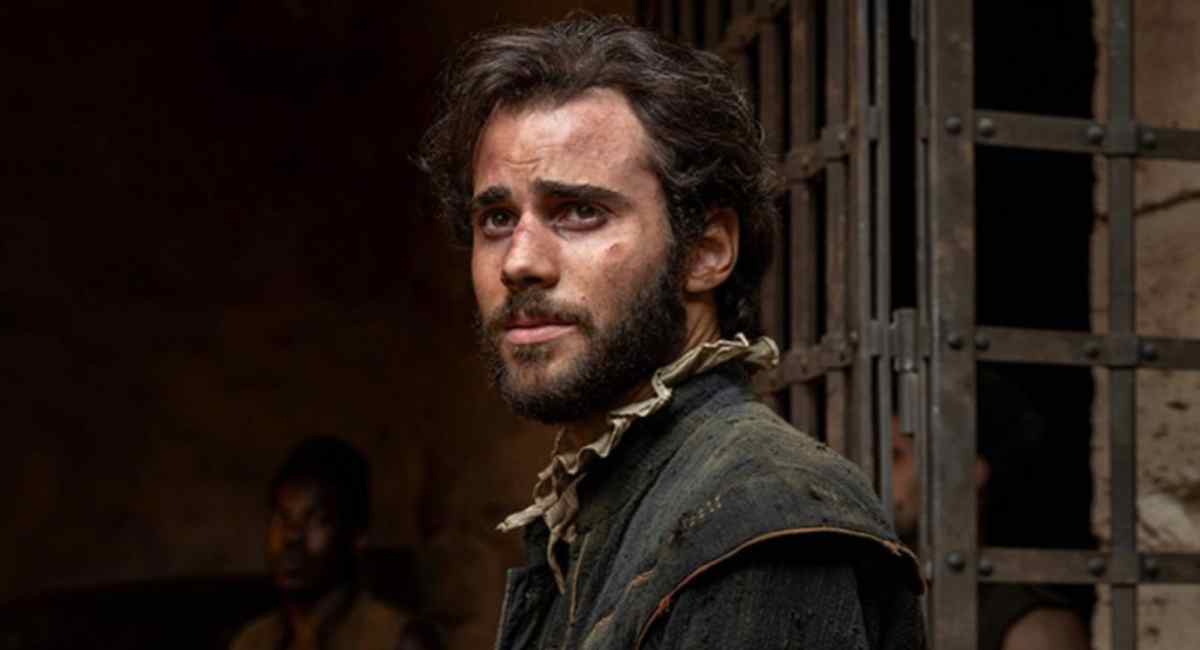
Alejandro Amenabar’s The Captive is a bold, visually rich historical drama that turns Don Quixote’s creator, Miguel de Cervantes, into the hero of his own fictional adventure. The film imagines a chapter of Cervantes’ life during his captivity in 16th-century Algiers, weaving themes of imagination, power, and identity into a lavish yet uneven narrative.

Image source:ig/thecaptive
The story opens with a backdrop of Mediterranean warfare, where ships’ crews are captured and sold into slavery. Among them is Miguel (Julio Pena Hernandez), a young Spanish soldier wounded in battle. Stranded in Algiers, he uses his storytelling gift to survive, entertaining fellow captives and catching the attention of Hassan Baja (Alessandro Borghi), the powerful regent known for both cruelty and charm.
What follows is a strange mix of danger, intellect, and seduction. Miguel and Baja’s relationship evolves from cautious curiosity into an intimate and romantic bond — one that challenges Miguel’s loyalties and beliefs. While his companions resent his privileged treatment, Miguel struggles between his longing for freedom and his fascination with this new world.
Amenabar crafts a film that is part biopic, part fantasy, and part romantic drama. However, the film’s episodic pacing and shifting tone occasionally make it feel more like a compact mini-series than a grand cinematic experience. Despite this, The Captive remains visually captivating, with lush sets, striking costumes, and a score that enhances its moody exoticism.
Julio Pena Hernandez delivers a handsome but somewhat restrained portrayal of Cervantes, while Borghi brings intensity and nuance to the role of the Bey. Their chemistry becomes the emotional anchor of the story, even as the narrative meanders through subplots of jealousy, betrayal, and loyalty.
.jpg)
Image source:ig/thecaptive
Historically, little is known about Cervantes’ time as a captive in Algiers, giving Amenabar creative freedom. The director leans into modern sensibilities, exploring homoerotic undertones and blurred cultural identities. While these ideas are intriguing, they sometimes clash with the film’s traditional historical style. The imagined “stories within the story” — Cervantes’ tales that might later inspire Don Quixote — feel underdeveloped, limiting the film’s emotional depth.
In the end, The Captive is a handsome, conceptually daring film that doesn’t quite soar as high as its ambitions. Its visuals and performances shine, but its uneven storytelling leaves a lingering sense of “almost.” Still, as a reinterpretation of one of literature’s most mysterious lives, Amenabar’s effort remains an intriguing watch — especially for lovers of art, history, and romantic imagination.


