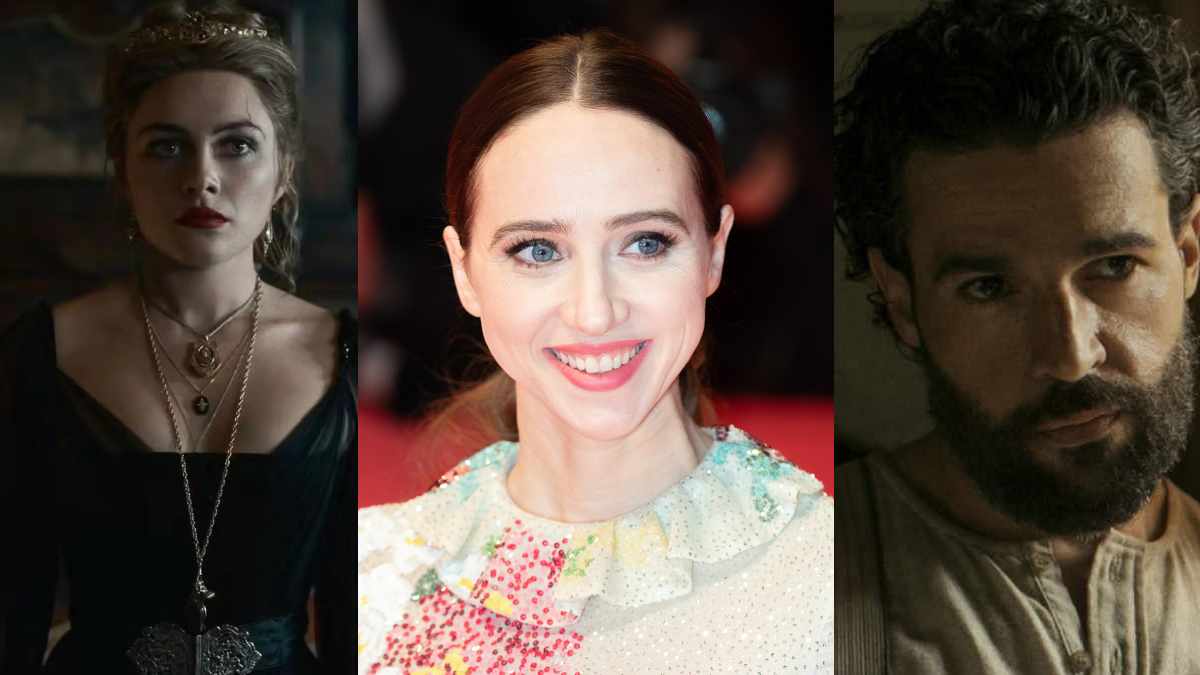
East of Eden: Zoe Kazan Reimagines Steinbeck’s Epic for Netflix
John Steinbeck’s East of Eden has already had one famous screen adaptation, but Zoe Kazan approaches the material with a very different opportunity: room to tell the entire story. Rather than concentrating on the section that became the basis for the 1955 James Dean film, Netflix’s seven-part limited series reaches across the novel’s broader family saga.
Kazan’s relationship with the book is unusually personal. She first encountered the novel at 15, long before she was asked to bring it to television. Her connection also carries a complicated family history: her grandfather, Elia Kazan, directed the earlier film adaptation.
That history could easily overwhelm a project like this. Instead, the new East of Eden uses Steinbeck’s themes of family, inheritance and personal choice as the foundation for a more expansive adaptation.
A Larger East of Eden Than the Classic Film
One of the most significant differences between the new series and the 1955 movie is its scope.
The film focused on the latter portion of Steinbeck’s story. Kazan’s adaptation takes on the novel as a whole, following Adam and Cathy alongside their children across decades, from 1862 through 1918.
Christopher Abbott plays Adam, while Florence Pugh portrays Cathy. Joseph Zada and Joe Anders play the next generation, with Mike Faist appearing as Adam’s half brother Charles. Hoon Lee plays Lee, an important character whose philosophical perspective receives substantially more attention in the series.
That expanded canvas gives the adaptation space to develop relationships and characters that could not receive the same treatment in a feature-length film.
Zoe Kazan’s Personal Connection to the Novel
Kazan’s history with East of Eden is central to understanding why this adaptation matters to her.
She grew up in a family of screenwriters and developed a strong attachment to literature early in life. Her own career has also connected writing and acting, beginning with Ruby Sparks and later continuing with Wildlife, which she co-wrote with Paul Dano.
Her grandfather’s connection to Steinbeck adds another layer. Elia Kazan directed the 1955 East of Eden, a film remembered particularly for James Dean’s performance.
Zoe Kazan did not watch that film or discuss the novel with her grandfather when she was growing up. He died in 2003, when she was 20. Years later, when the opportunity to develop a new adaptation arrived, she found herself confronting both her personal affection for the novel and the unavoidable connection to her family.
The themes of inheritance and breaking generational patterns therefore carry meaning beyond the story itself.
Florence Pugh Brings Cathy Into Focus
Cathy Ames is one of Steinbeck’s most complicated characters, and Florence Pugh takes on the role at the center of the series' darker material.
The adaptation is interested in Cathy not simply as a conventional villain, but as part of the messy human landscape that Kazan found compelling in the novel.
Pugh has described Kazan's approach as an effort to make the characters feel like genuine people living within their historical circumstances. That philosophy appears particularly relevant to Cathy, whose motivations and relationships are crucial to the story's larger examination of human behavior.
Christopher Abbott's Adam provides a contrasting presence, while the younger generation allows the series to explore how family conflicts and expectations can continue from one generation to another.
Timshel Becomes Central Again
A major element restored by the longer adaptation is the idea of timshel, a Hebrew term translated in the source material as “thou mayest.”
The concept is important because it connects directly to one of East of Eden's central questions: are people trapped by their nature and circumstances, or do they have the ability to make different choices?
With seven episodes available to develop the story, the series has considerably more room to explore this question than the earlier film.
It also gives greater weight to the relationship between individual choice and family inheritance, two ideas that sit at the heart of Steinbeck's novel.
Turning Steinbeck’s Slow-Burning Novel Into Television
Adapting a major literary work is not simply a matter of transferring scenes from page to screen. Kazan has acknowledged that Steinbeck's novel has a deliberately patient opening, allowing considerable time for landscape, history and reflection.
Television drama demands a different rhythm.
The series therefore makes an important structural decision by opening with a dramatic event involving Cathy rather than reproducing the novel's original progression. Her arrival, injured and covered in blood, immediately creates a narrative question for the audience.
That choice illustrates the difference between literary storytelling and screenwriting. A novel can spend pages establishing a world before reaching its central dramatic conflict. A television series has to establish momentum while still preserving the qualities that made the source material valuable.
What Works in the Adaptation
The biggest advantage of this version is its scale.
A seven-part format allows the story to include characters and relationships that the earlier film could only leave aside. Charles and Lee, in particular, receive greater space, while the parallel family narratives can develop over time.
The adaptation also benefits from treating Steinbeck's philosophical ideas as more than background material. The emphasis on timshel gives the story a thematic framework connecting its characters' decisions with the question of whether people can escape inherited patterns.
Kazan's familiarity with the novel helps here. Her approach comes from years of engagement with the material rather than a superficial attempt to modernize a famous title.
Where the Adaptation Faces Its Biggest Challenge
The same breadth that makes the series interesting also creates its biggest challenge.
Steinbeck's novel is expansive, reflective and frequently more interested in ideas than immediate action. Translating that quality into episodic television requires substantial restructuring.
Kazan has written every episode and shares showrunning responsibilities with Jeb Stuart. That means the series has been shaped by a consistent creative interpretation, but it also places enormous responsibility on the adaptation to balance literary depth with television pacing.
The opening restructuring demonstrates that the series is not attempting to reproduce the book mechanically. Whether every change works equally well is part of the larger question surrounding any ambitious literary adaptation.
East of Eden and the Weight of Legacy
There is an intriguing parallel between the story Kazan is adapting and the circumstances surrounding the production itself.
Steinbeck's novel repeatedly examines what people inherit from their families and what they choose to do with that inheritance. Kazan is adapting a book that was previously filmed by her grandfather while also developing her own relationship with the material.
Zoe Kazan and the cast of EAST OF EDEN reflect on bringing Steinbeck’s classic novel to life in a new way. pic.twitter.com/nEbdV1rKt7
— Netflix (@netflix) September 30, 2026
That does not make the series simply a family legacy project. Her connection to the novel began independently, years before this television adaptation existed. But the history inevitably adds another dimension to the production.
The result is an adaptation shaped by both literary affection and an awareness of what came before it.
"And Mike looks hot."
— Netflix (@netflix) October 2, 2026
Florence Pugh, Mike Faist, and creator Zoe Kazan break down a scene from EAST OF EDEN. pic.twitter.com/AstqOFpIyF


